Guava air layering to raise new plants from a hybrid guava

Quick answer
For guava air layering, pick a healthy branch on your hybrid guava that isn't too thin, weak or dry. Strip about 1 inch of bark all the way round and scrape off the thin layer underneath so the bark can't rejoin. Put fungicide on the spot, pack in lightly damp cocopeat and tie it tightly in polythene. Repeat on several branches and one tree gives you several new plants that fruit like the parent.
Mix it into the soil when you pot up the rooted layer.
See vermicompostCan every fruit tree be air layered?
Rupesh opens this reel with something he reckons most people don't know: you can't air layer every fruit plant. Not every tree will put out roots from a wrapped branch.
Guava is one that layers well, which is why nurseries raise most guava plants by layering or cuttings. Whatever fruit plant you want to layer, check first that the method works for it, or weeks of effort can go to waste.
 More from this seriesएक नींबू के पौधे से कई नए पौधे कैसे तैयार करें?
Why not grow hybrid guava from seed?
The reel asks whether you'd like to raise 10 new plants yourself from one hybrid guava, plants that will go on to give good fruit.
Seed from a hybrid guava won't reliably give the same fruit. Size, sweetness and flesh can all change, and a seedling takes longer to bear. An air layer is a branch of the same tree, so it fruits like its parent.
How to choose a branch for guava air layering
The first job is choosing a healthy branch on your hybrid guava. The reel is clear that it shouldn't be too thin, weak or dry, because picking the wrong branch at the start can waste days of work.
A branch between pencil and finger thickness, with green leaves and some sun, usually works. Skip any with pests or yellowing leaves. There's more on picking branches in the star fruit air layering article, and the same rules apply to guava.
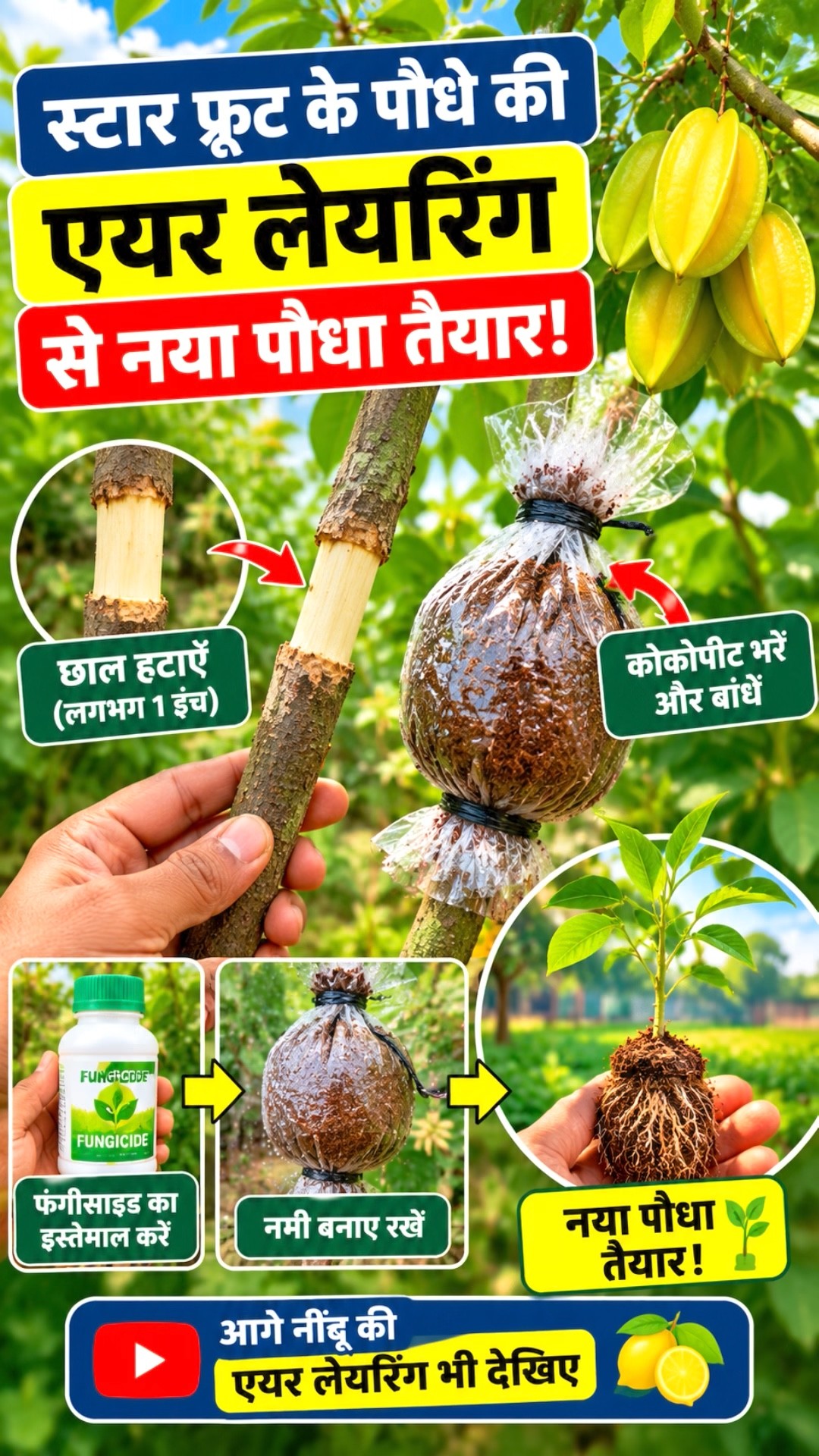 More from this seriesस्टार फ्रूट के पेड़ से नया पौधा तैयार करने का तरीका!
How much bark to remove for guava air layering
In the reel about 1 inch of bark is stripped all the way round the branch. Then the thin layer on top of the wood is cleaned off as well, so the bark is less likely to join up again.
Leave that layer and the bark can heal over within days. The branch then keeps getting food from the tree and never needs to make roots. Make two cuts round the branch about an inch apart, peel the bark between them and gently scrape the smooth green layer underneath with the back of the knife. Don't cut deep into the wood.
 More from this seriesस्टार फ्रूट और नींबू की एयर लेयरिंग से नए पौधे तैयार! hoga ya nhi
Why fungicide and lightly damp cocopeat matter
Once the bark is off, fungicide goes on the spot. Rupesh explains that the damp makes fungus a risk there, and fungicide helps cut that risk.
The cut is then packed with lightly damp cocopeat. Lightly damp, not dripping. Soak it and squeeze it out in your fist so it feels moist without water running out. Soggy cocopeat can rot the branch. More on cocopeat is in how to use cocopeat in pots.
Wrapping a guava air layer in polythene
Finally the whole spot is tied up firmly in polythene, so the cocopeat stays moist and roots can come through over time.
Tie both the top and bottom of the polythene tightly with twine. If it's loose, rain gets in or the cocopeat dries out, and either way no roots form. Check from the outside now and then that you can see moisture inside, and don't keep opening it.
Getting 10 plants from one guava tree
Repeat the same steps on separate branches. The reel's title talks about 10 new plants from one hybrid guava, but let the size and strength of your own tree decide. Wrap half the branches of a small tree and the tree itself will suffer.
Not every branch is sure to root either, so layer a few more than the number of plants you want. The same method was shown in this series' lemon air layering reel, and first of all in air layering lemon and star fruit.
Potting a new guava plant once it has roots
When brown or white roots show through the polythene in several places, cut the branch just below the wrap. Take off the polythene, leave the cocopeat on the roots and plant it in a pot or nursery bag.
Use a light mix that drains well, with vermicompost or well-rotted cow dung manure in it. Keep it in shade for the first two or three weeks, then bring it into sun slowly.
At the end of the reel Rupesh said the next video would show three air layering mistakes that ruin the plant. That reel is out now, and what not to do once the layer is tied is in air layering mistakes.
See all marigold and nursery reels
Frequently asked questions
Can guava be air layered?
Yes, guava air layers well, and that's what the reel shows. Keep in mind that the method doesn't work on every fruit plant.
How much bark should I remove for air layering?
In the reel about 1 inch is stripped all the way round, and the thin layer underneath is cleaned off too so the bark can't rejoin.
Why use fungicide when air layering?
The cut stays wrapped in damp cocopeat for weeks, and fungus can set in. Fungicide lowers that risk.
Why not grow hybrid guava from seed?
A seedling from a hybrid won't reliably give the same fruit. An air layer fruits like its parent tree.
https://gulzario.com/guides/guava-air-layering-step-by-step