Lemon air layering to raise many plants from one tree

Quick answer
Lemon air layering needs no seed. Pick a healthy branch that isn't too thin, weak, or old and dry. Strip about 1 inch of bark all the way round, put fungicide on the spot, pack in well-soaked cocopeat and tie it tightly in polythene. Do this on several branches and one tree gives you several new plants, though not every branch will root.
No parent tree at home? Start here.
See kagzi lemon plantsNew lemon plants without seed, by air layering
If you have one good lemon plant and want more like it, you don't need seed. In this Mzp mini vlog reel, Rupesh shows that you can raise new plants yourself by air layering that same plant.
A layered plant is a copy of its parent, with the same juice and sourness. A lemon grown from seed may not be, and it takes longer to fruit. That's why nurseries raise most fruit plants by layering or cuttings.
 More from this seriesस्टार फ्रूट और नींबू की एयर लेयरिंग से नए पौधे तैयार! hoga ya nhi
Which branch to use for lemon air layering
The reel starts with the branch. Choose a healthy one from your lemon plant that is neither too thin nor weak, and not old and dry either. Rupesh stresses that picking the right branch matters a lot.
A branch between pencil and finger thickness, with full green leaves and some sun, usually works. Skip any with pests, dry patches or yellow leaves, and mind the thorns.
The same advice for star fruit is covered in more detail in choosing a star fruit branch.
Why the bark must come off all the way round
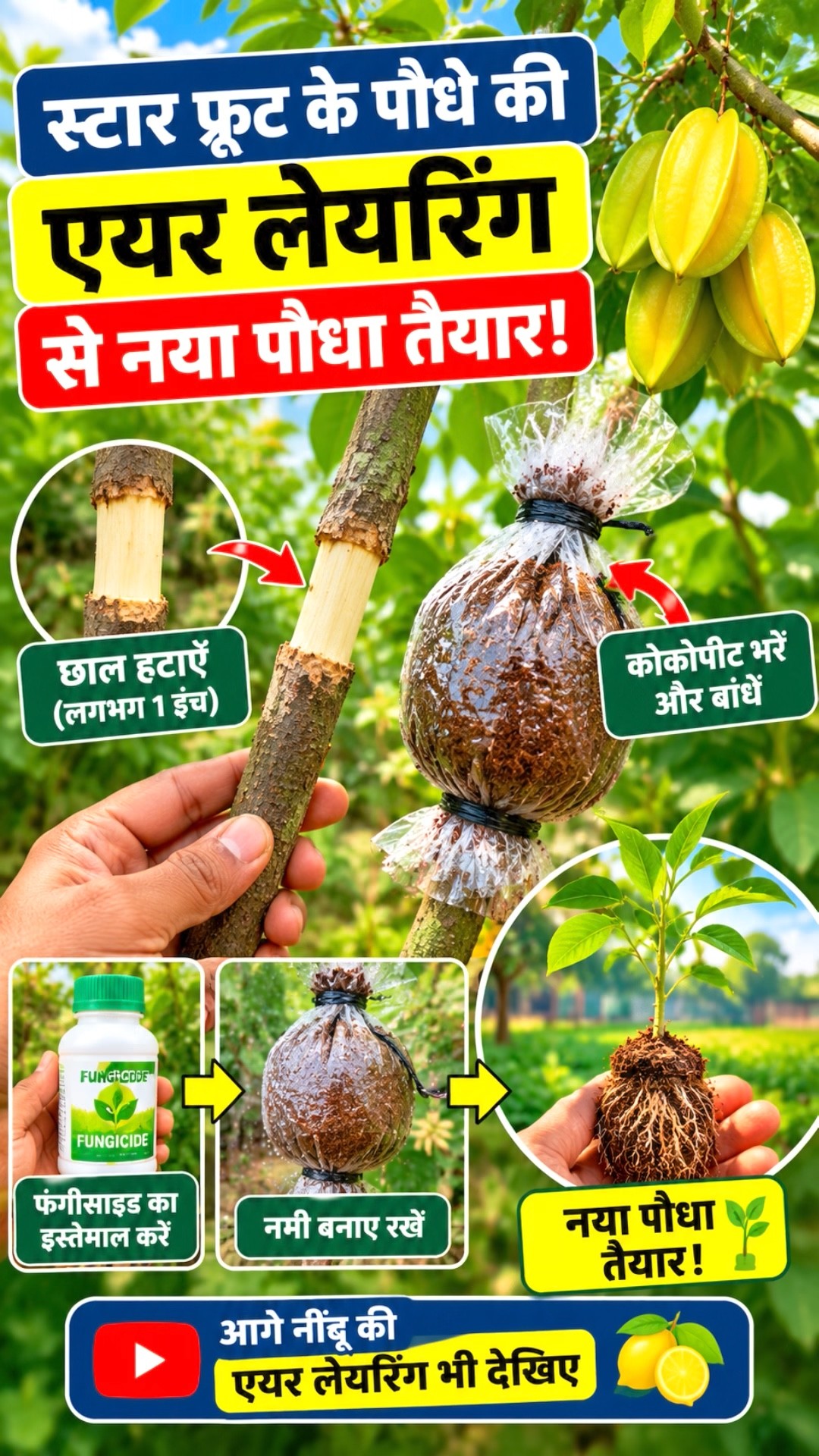
Strip about 1 inch of bark right round the chosen branch. The reel calls this the point to watch most closely: the bark has to come off the whole way round.
If even a small strip is left, a new layer can form there. Once the bark joins up, the branch keeps getting food from the tree and has no reason to make roots.
Make two cuts round the branch about an inch apart and peel off the bark in between. Scrape the thin green layer underneath with the back of the knife, without cutting deep into the wood.
 More from this seriesस्टार फ्रूट के पेड़ से नया पौधा तैयार करने का तरीका!
Applying fungicide and wrapping soaked cocopeat
Once the bark is off, fungicide goes on the spot to cut the risk of fungus while it stays damp. That spot sits in wet cocopeat for weeks, so don't skip it.
Then pack well-soaked cocopeat over the cut and tie polythene tightly all round. The reel says this keeps moisture inside and gives the roots the right conditions to come out.
Soak the cocopeat and squeeze it so it doesn't drip when pressed. Tie both the top and bottom of the polythene firmly with twine. More on cocopeat is in how to use cocopeat in pots.
How many air layers to put on one lemon tree
The reel says that this way you can raise lots of plants from a single lemon plant. In an earlier reel from this nursery, one lemon was layered in about 8 to 10 places.
Let the plant's size and strength decide. Wrap half the branches on a small or weak plant and the plant itself will suffer. Use separate branches rather than several spots on one, and leave enough branches for the parent to stay healthy.
Why some lemon air layers don't root
Rupesh is clear that not every branch will root. So it makes sense to layer a few more branches than the number of plants you want.
The usual reasons are a strip of bark left behind that heals over, a loose wrap that lets the cocopeat dry out, or a branch that was too thin or too old. Roots come slowly in cold weather, so layers made in November or December need more patience.
Check through the polythene now and then. You should see moisture inside. Don't keep opening it.
Potting a new lemon plant once it has roots
When roots show through the polythene in several places, cut the branch just below the wrap. Take off the polythene, leave the cocopeat on the roots and plant the whole ball in a pot.
Use a light mix that drains well, with some vermicompost in it. Keep the plant in shade for the first two or three weeks, then bring it into sun slowly. Ongoing care is in kagzi lemon plant care in pots.
At the end of the reel Rupesh said the next video would show air layering on a hybrid guava, and that the series would cover raising several fruit plants one by one. That reel is out now, see guava air layering.
See all marigold and nursery reels
Frequently asked questions
Can I grow a lemon plant without seed?
Yes. Air layering grows roots on a branch of an existing lemon plant, which you then cut off as a new plant. No seed is needed.
How many plants can one lemon tree give?
That depends on its size and strength. A big plant can carry layers on several branches, but leave enough for the parent to stay healthy. Not every branch will root.
How much bark should I remove for air layering?
In the reel about 1 inch of bark is stripped all the way round. If any is left, it can grow back over and no roots form.
How wet should the cocopeat be?
Soak it and squeeze it out, so it feels damp in your fist without dripping. Soggy cocopeat can rot the branch.
https://gulzario.com/guides/lemon-air-layering-many-plants