Air layering mistakes that can ruin days of work

Quick answer
Most air layers fail after wrapping, for three reasons. Opening the polythene again and again to look for roots, which spoils the moisture inside. Letting the cocopeat dry out or making it too wet, since dry cocopeat won't root and soggy cocopeat rots. And the biggest one, tying the wrap loosely so the moisture escapes. Tie it firmly all round, keep the cocopeat damp, and check from the outside.
Mix it into the soil when you pot up the rooted layer.
See vermicompostWhy air layering mistakes happen after wrapping
Picking the branch, stripping the bark and tying on the cocopeat takes an afternoon. The real wait starts afterwards, when the wrap sits on the branch for weeks while roots slowly form inside. Rupesh says plainly in this reel that three mistakes after layering can throw away days of work.
It follows the guava air layering reel in the same series, which showed the whole method. Read that one for how to set up a layer. This one is about what comes after.
 More from this seriesएक हाइब्रिड अमरूद के पौधे से 10 नए पौधे कैसे तैयार करें? 😍
Why you shouldn't keep opening the polythene
This is the first mistake. Plenty of people open the wrap every day to see whether roots have come. The reel says doing that can spoil the moisture inside.
A tied wrap is a small damp room. Each time you open it, warm dry air gets in, the cocopeat starts drying from the top, and the fine new roots can snap when your fingers touch them. When you tie it back up, it's rarely as tight as it was.
Be patient. Lemon and guava usually take a few weeks to root, longer in cool weather. Until then, check from the outside.
How damp should cocopeat be for air layering?
The second mistake is not watching the cocopeat's moisture. Rupesh explains that if it dries out, roots struggle to form, and if you make it wetter than it needs to be, the risk of rot goes up. So keep it damp, always, but not wet.
A simple test before wrapping is to soak the cocopeat and squeeze it hard in your fist. Your hand should feel damp, with no stream of water running out. Once it's wrapped, a little mist or a few droplets on the inside of the polythene means the moisture is about right.
If after some weeks the cocopeat looks pale and dry from outside, loosen the top tie a little, add a small amount of water with a syringe or thin tube, and tie it tight again. There's no need to open the whole wrap. More on cocopeat is in how to use cocopeat in pots.
 More from this seriesएक नींबू के पौधे से कई नए पौधे कैसे तैयार करें?
Tying an air layer tightly matters most
The reel calls the third mistake the biggest one, not keeping the layer properly tied. If the polythene is loose or the moisture inside starts escaping, all the work can be lost. That's why it needs to be tied well on every side.
A loose wrap hurts in two ways. Open at the top, and rain or watering runs in and the cocopeat starts to rot. Open at the bottom, and the moisture leaks away and the cocopeat dries in a few days. In wind, a loose bundle also turns on the branch and rubs the cut.
Give both ends of the polythene two or three firm turns of twine or tape. In a spot with harsh sun you can wrap old newspaper or a piece of sacking over the bundle so it doesn't overheat.
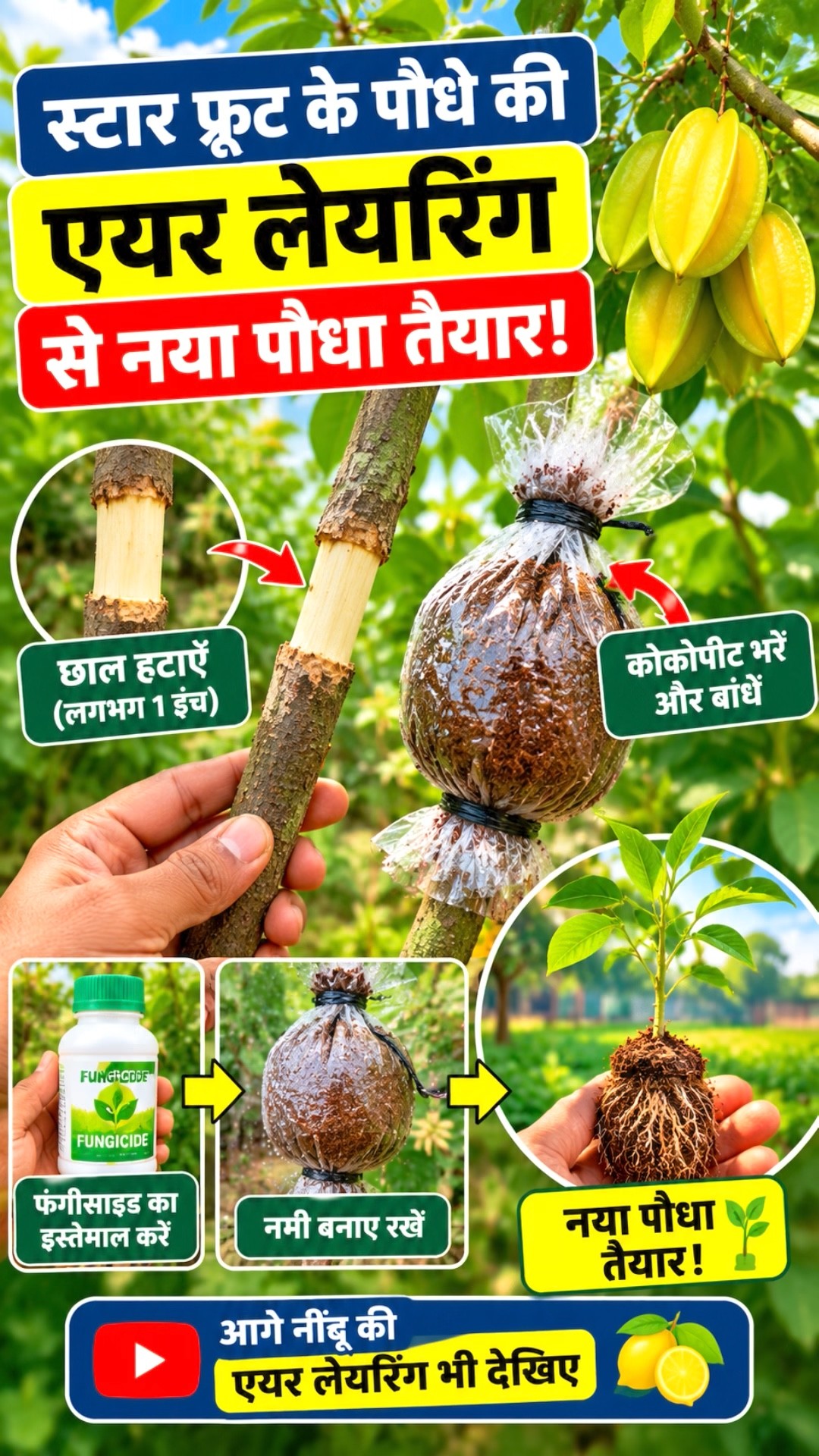 More from this seriesस्टार फ्रूट के पेड़ से नया पौधा तैयार करने का तरीका!
Why air layered plants fruit sooner than seedlings
After the mistakes, Rupesh mentions an advantage he says few people know. When you raise a new plant from a branch of a fruit tree, it keeps the qualities of the mother plant, and it often starts fruiting sooner than a plant grown from seed.
That's because a layered branch is already a grown, mature part of the tree. A seedling has to grow up from scratch first, and seed from a hybrid may not give the same fruit at all. It's the reason nurseries raise most fruit plants by layering, cuttings or grafting.
 More from this seriesस्टार फ्रूट और नींबू की एयर लेयरिंग से नए पौधे तैयार! hoga ya nhi
Air layering your own lemon or guava at home
The reel points out that if you have a lemon, guava or other fruit tree near your home, you can raise a new plant yourself from one of its healthy branches.
The full lemon method is in lemon air layering for many plants, choosing the right branch is covered in star fruit air layering, and the method first appeared in air layering lemon and star fruit. If you don't have a lemon tree to start from, a Kagzi lemon plant is also available from our nursery.
Once roots have formed, cut the branch just below the bundle and pot it up. Use a light mix that doesn't hold water, with vermicompost or well-rotted cow dung manure mixed in.
How to tell if an air layer has rooted without opening it
The reel ends on exactly this question, how to tell whether an air layer has rooted without opening the polythene. The reel that came next showed potting up a rooted lemon layer, written up in air layering after rooting. This article will be updated when the rooting question gets its answer.
For now, it's worth knowing that this is why most people use clear polythene for air layering, so they can see what's going on inside from the outside.
See all marigold and nursery reels
Frequently asked questions
When should I open an air layer?
Not to look for roots. Opening it again and again spoils the moisture inside. Take the polythene off only when it's time to cut the branch and pot it up.
How wet should cocopeat be for air layering?
Always damp, never dripping. Dry cocopeat won't let roots form, and soggy cocopeat raises the risk of rot.
What is the biggest air layering mistake?
According to the reel, not tying the layer properly. A loose wrap lets the moisture escape and all the work can be lost.
Do air layered plants fruit sooner?
Often, yes. They keep the mother plant's qualities and usually start fruiting sooner than plants grown from seed.
https://gulzario.com/guides/air-layering-mistakes